
Introduction
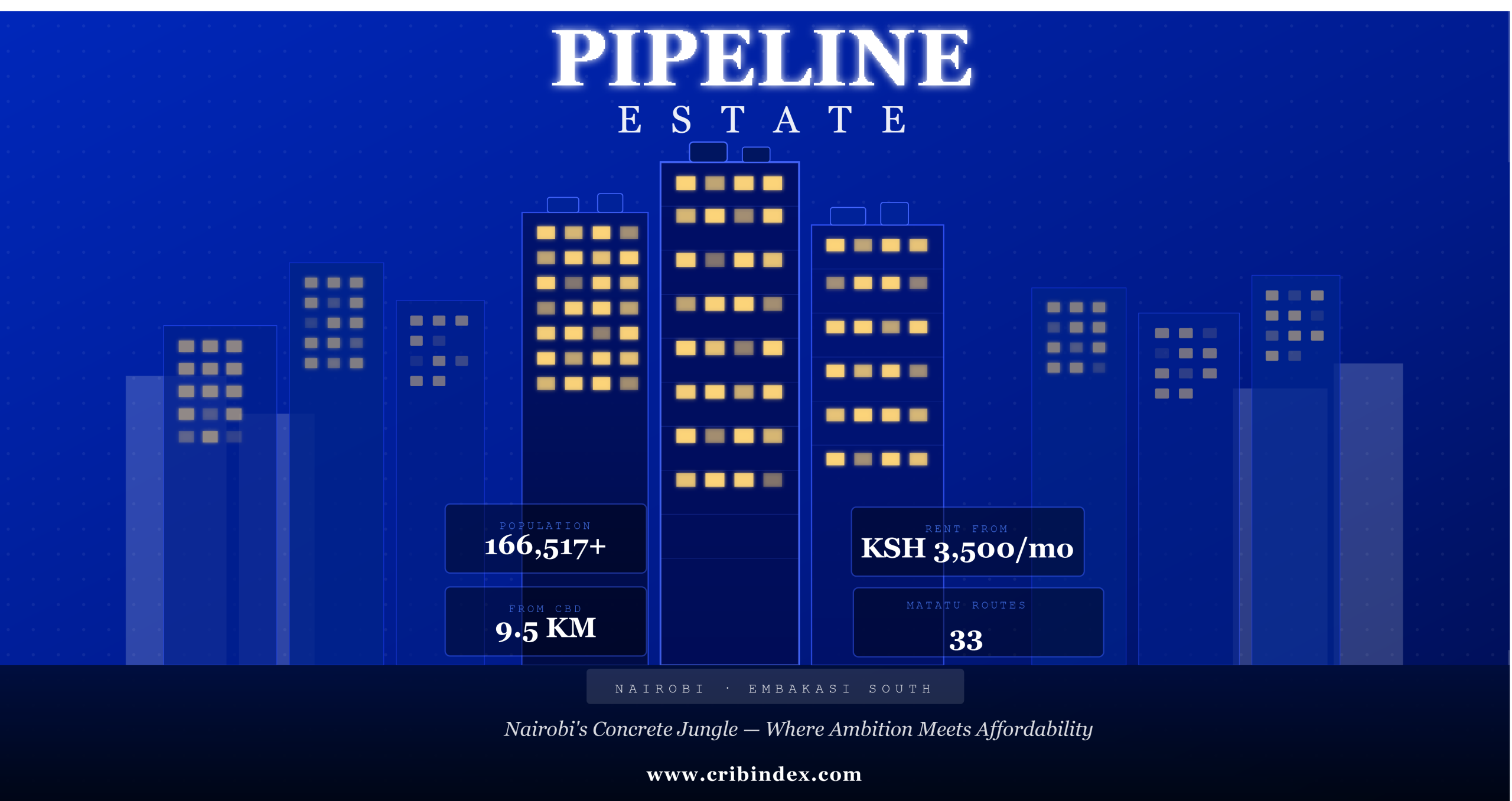
Pipeline Estate Nairobi is one of the most talked-about, most populated, and most affordable urban neighborhoods in Kenya’s capital city. Situated approximately 9.5 km southeast of Nairobi’s Central Business District (CBD), Pipeline Estate Nairobi sits west of the Outer Ring Road within the broader Eastlands area, falling under Embakasi South Constituency, Nairobi County. Whether you are a first-time city dweller, a young professional, or a family seeking budget-friendly housing close to Nairobi’s employment hubs, Pipeline Estate Nairobi deserves serious consideration.
The estate is a concrete jungle of towering rental apartments, bustling kiosks, street vendors, and energetic matatu stages — all packed into a relatively compact area. Despite its reputation for density and infrastructure challenges, Pipeline Estate Nairobi remains a magnet for tens of thousands of Nairobians who are drawn here by its unbeatable affordability, strategic location, and the sheer vibrancy of its street life. This comprehensive neighborhood guide covers everything you need to know before moving to or visiting Pipeline Estate Nairobi.
Table of Contents
Brief History
Pipeline Estate Nairobi owes its name and origins to the Kenya Pipeline Company (KPC) depot that once operated in the broader Embakasi area. According to urban planning records, the land that now forms Pipeline was originally open savannah grassland interspersed with acacia trees and transport corridors that connected neighboring settlements.
Development began in earnest during the 1970s and 1980s when businessman Gerishon Kirima and other developers subdivided large parcels of land into smaller plots and sold them off. Ordinary Kenyans purchased shares in land-buying companies, which borrowed funds from institutions like the Kenya Development Corporation to acquire and develop land. From the late 1990s through the early 2000s, the City Council of Nairobi began attempting to regulate what had already become a fast-growing, privately-led residential expansion.
The estate was originally marketed as affordable housing for Nairobi’s growing working class — laborers from Industrial Area, ground workers from Jomo Kenyatta International Airport (JKIA), and service workers from the city centre. Over time, however, the rapid unplanned densification far outpaced available infrastructure, giving rise to the iconic — and sometimes notorious — image of tightly-packed apartment blocks that define Pipeline Estate Nairobi today. As of the 2019 Kenya National Bureau of Statistics census, Pipeline together with the neighboring Kware had a combined population of approximately 166,517 residents.
Transport & Directions from Nairobi CBD
Getting to Pipeline Estate Nairobi from the city centre is straightforward and affordable. The estate is well-served by matatus operating along several key routes:
- Route 33DP — This is the most direct matatu line, running from Nairobi CBD straight to Pipeline Estate.
- Route 33C — Follows the Nairobi–Cabanas–Embakasi corridor.
- Route 33DC — Passes through Donholm and Embakasi before reaching Pipeline.
Matatu fares range from Ksh 50 to Ksh 150 depending on the time of day, the matatu company, and traffic conditions. During peak hours — typically 7:00–9:00 AM and 5:00–7:30 PM — fares may rise and travel times can be longer due to congestion along Outer Ring Road and Mombasa Road. Boda bodas (motorcycle taxis) and tuk-tuks are also widely available within the estate for shorter intra-neighborhood trips.
For those driving from Nairobi CBD, the most common route is:
CBD → Jogoo Road → Outer Ring Road → Pipeline Estate (approximately 20–35 minutes without traffic)
Alternatively:
CBD → Mombasa Road → turn-off towards Embakasi → Pipeline Estate
The Outer Ring Road is the primary artery serving the neighborhood and connects it to JKIA in the south and Kasarani in the north.
Places of Worship
Pipeline Estate Nairobi is home to a remarkably diverse religious community. With over 100 churches spread across the estate alone, faith is a central pillar of community life here. Key places of worship include:
- ACK St. Luke’s Church, Pipeline — Anglican Church of Kenya congregation serving the estate.
- Redeemed Gospel Church, Pipeline — A large Pentecostal congregation with active community programs.
- Jesus Winner Ministry Church, Pipeline — Known for lively worship services and youth outreach.
- Full Gospel Churches of Kenya, Pipeline Branch — A well-established evangelical church in the area.
- Roman Catholic Church, Tassia/Pipeline — Serves the broader Pipeline–Tassia Catholic community.
- Pipeline SDA Church — Seventh-Day Adventist congregation active in health and community education.
- Deliverance Church, Embakasi — A large charismatic church nearby serving Pipeline residents.
- Pipeline Mosque — Serving the Muslim community in the estate and its surroundings.
- Brotherhood of the Cross and Star — An international spiritual organization with a presence in Pipeline.
- Various Independent Pentecostal Churches — Dozens of smaller, neighborhood-based congregations meeting in residential spaces throughout Pipeline.
Healthcare Services
Access to healthcare in Pipeline Estate Nairobi is primarily through private clinics and mid-tier hospitals, as the estate currently lacks a public government hospital. Residents access the following facilities:
- Pipeline Hospital — One of the most well-known private hospitals directly serving Pipeline Estate, offering outpatient, maternity, and general medical services.
- Afrismart Group of Hospitals, Pipeline — A growing private healthcare group with a branch in Pipeline offering comprehensive medical services.
- Embakasi Nursing Home — Provides general outpatient care, maternal health services, and minor procedures.
- Kenyatta National Hospital (KNH) — Located approximately 12 km away in Upper Hill, this is Kenya’s largest public referral hospital, accessible via matatu.
- Mama Lucy Kibaki Hospital — A Nairobi County public hospital in nearby Embakasi offering subsidized healthcare.
- Avenue Hospital, Embakasi Branch — Offers specialist and general outpatient services.
- Various Local Pharmacies and Clinics — Numerous chemists and small-scale clinics are scattered throughout Pipeline providing routine medication and basic consultations.
- Ruai Family Hospital — Located in the wider Embakasi area, offering pediatrics, maternity, and imaging services.
Educational Institutions
Education in Pipeline Estate Nairobi is almost entirely private, as the estate currently has no public primary or secondary school — a well-documented gap that county authorities have acknowledged. Despite this, the density of private institutions is impressive:
Primary & Secondary Schools
- Tassia Junior Academy — A popular private primary school near the Pipeline–Tassia border.
- Embakasi Hill School — Offering both primary and secondary education for residents in the wider area.
- Light Academy, Embakasi — A private school known for good academic results at KCPE and KCSE levels.
- Starehe Boys’ Centre — Though not in Pipeline directly, it is the aspirational school for many Pipeline youth, located nearby in the city.
- Shining Stars Academy, Pipeline — A private institution offering ECDE through primary education.
- Little Flowers Academy — An early childhood development and primary school serving Pipeline families.
- Calvary Christian School — A faith-based private primary school in the Pipeline-Tassia area.
- Pipeline Progressive Academy — A community-oriented private school catering to pipeline families on modest budgets.
Colleges & Technical Institutions
- Topmax College, Pipeline — A mid-level college offering IT, business, and technical courses, located at Quickmart Supermarket Building on Outer Ring Road.
- Paris College, Pipeline — Offers hospitality, hairdressing, and beauty courses; located opposite the Pipeline stage.
- Nairobi Aviation College — Close to JKIA, it serves Pipeline students pursuing aviation and tourism courses.
- Kenya Institute of Business and Counselling Studies (KIBCS) — Provides business management and counseling diploma courses.
Entertainment Joints
Pipeline Estate Nairobi may be primarily a residential neighborhood, but it has a surprisingly vibrant entertainment scene, especially for lovers of nightlife, local cuisine, and social gatherings:
- Blaze Lounge, Pipeline — A popular local bar and lounge known for sports screening and Friday night vibes.
- Rumors Bar & Restaurant, Pipeline — A neighborhood favorite for nyama choma, cold drinks, and live music on weekends.
- Pipeline Social Club — A community-oriented venue for pool, darts, and casual drinks.
- Omoka na Meza Bar & Grill — A lively grilling spot popular among pipeline residents especially on weekends.
- Qzeen Food Parlor — A local food outlet well-rated for quick bites and snacks.
- Tassia Pub — Located at the Pipeline–Tassia edge, this pub draws cross-neighborhood crowds for football matches.
- Sawa Sawa Bar, Pipeline — A neighborhood joint known for affordable drinks and a relaxed atmosphere.
- Local Kibanda Eateries (Mama Fua Joints) — The estate is dotted with dozens of small, beloved food kiosks serving pilau, githeri, matumbo, and chapati at Ksh 50–150 per plate — the heartbeat of Pipeline’s food culture.
Recreational Parks & Open Spaces
Recreational facilities are one of Pipeline Estate Nairobi’s most significant challenges. The dense building footprint has left minimal formal open space. However, residents access the following parks and recreation areas:
- Kware Park — A small open recreational space in the neighboring Kware area used by Pipeline residents for community sports.
- Tassia Recreational Ground — Located at the Pipeline–Tassia border, used for football and informal athletics.
- Nairobi Arboretum — Approximately 10 km from Pipeline, this urban forest park is a weekend getaway for nature lovers.
- Uhuru Park — A classic Nairobi landmark about 10 km away, popular for picnics and recreation.
- Jeevanjee Gardens — In the CBD, accessible via the 33DP matatu, offering green space and public seating.
- Imara Daima Green Belt — The adjoining Imara Daima neighborhood has better-maintained green corridors used by Pipeline youth for jogging.
- Community Gyms (Indoor Recreation) — Numerous informal gyms have sprung up within Pipeline’s apartment complexes, catering to fitness enthusiasts who lack outdoor spaces.
- Pipeline Estate Football Pitches — Informally maintained patches of open ground that serve as community football pitches, especially active on weekends.
Rental Houses & Rent Range Breakdown
Pipeline Estate Nairobi is renowned across Nairobi for being among the most affordable places to rent. This is the estate’s biggest draw. Below is a current rent range breakdown:
| House Type | Monthly Rent Range (Ksh) |
|---|---|
| Single Room (shared bathroom) | Ksh 3,500 – Ksh 5,500 |
| Bedsitter | Ksh 6,000 – Ksh 10,000 |
| One-Bedroom Apartment | Ksh 10,000 – Ksh 13,000 |
| Two-Bedroom Apartment | Ksh 15,000 – Ksh 22,000 |
Most units are in multi-story apartment blocks (ranging from 4 to 10 floors) managed by private landlords. Amenities typically include shared water access, communal corridors, and basic security.
Note: Ground-floor units tend to be slightly cheaper due to limited natural light. Upper-floor units offer better ventilation and mobile network connectivity. Water is often supplied on specific days of the week, and some residents purchase water privately.
Looking for rental listings in Pipeline Estate Nairobi? Visit Cribindex.com — Kenya’s comprehensive property search platform — to browse verified, up-to-date rental listings across Pipeline and hundreds of other Nairobi neighborhoods. Crib Index helps you compare prices, neighborhoods, and amenities so you find the right home faster.
Shopping Places
Pipeline Estate Nairobi and its immediate surroundings offer a solid variety of shopping options ranging from major supermarkets to informal open-air markets:
- Quickmart Supermarket, Pipeline (Outer Ring Road) — The anchor supermarket for Pipeline residents, located on Outer Ring Road and housing several businesses within the same building.
- Naivas Supermarket, Embakasi — A trusted Kenyan supermarket chain with branches accessible to Pipeline residents along Outer Ring Road.
- Tumaini Supermarket, Fedha — Located in the nearby Fedha area, offering groceries and household goods at competitive prices.
- Pipeline Open-Air Market — A bustling informal market where fresh produce, second-hand clothes (mitumba), and household goods are sold at very low prices.
- Tuskys Supermarket (Embakasi area) — Despite challenges at the chain level, Tuskys outlets remain in operation in the broader Embakasi zone.
- Outer Ring Road Shops & Boutiques — A long commercial strip of boutiques, hardware stores, electronics shops, and mobile phone dealers serving Pipeline residents.
- Kware Market — An informal open-air market in neighboring Kware selling fresh vegetables, meat, and grains at wholesale prices.
- Southfield Mall (Airport North Road) — A nearby mall offering a more formal retail experience including dining, fashion, and banking services.
- Tassia Shopping Centre — A small but well-stocked neighborhood shopping area on the Pipeline–Tassia edge.
- Mitumba Markets along Pipeline Roads — Second-hand clothing markets that are extremely popular among Pipeline’s cost-conscious residents.
Government Institutions
Given Pipeline’s location within Embakasi Sub-County, residents have access to the following government institutions:
- Embakasi Sub-County Government Offices — Handles administrative, licensing, and social welfare services for residents.
- Pipeline Police Station — The primary law enforcement post serving Pipeline Estate.
- Embakasi South Constituency Office — The legislative and CDF (Constituency Development Fund) office for the area.
- Kenya Revenue Authority (KRA), Times Tower — Accessible via CBD for tax-related services.
- Huduma Centre, Nairobi CBD / Embakasi — The nearest Huduma Centres provide national government services including ID registration, NHIF, and NSSF services.
- JKIA Immigration & Kenya Airports Authority — Located just south of Pipeline, JKIA is a major government employment hub for many Pipeline residents.
- Nairobi City County Ward Office (Imara Daima Ward) — Pipeline falls under the Imara Daima ward, whose county offices handle local governance matters.
- Kenya National Bureau of Statistics (KNBS) Field Office — Handles data collection and public surveys in the Embakasi region.
Advantages of Living in Pipeline Estate Nairobi
- Extremely Affordable Rent — Pipeline offers some of the lowest rents in Nairobi, making it ideal for first-time city residents, students, and low-to-middle income earners.
- Proximity to Nairobi CBD — At just 9.5 km from the city centre, Pipeline Estate Nairobi provides easy, affordable access to Nairobi’s commercial and employment heartland.
- Excellent Matatu Connectivity — Multiple matatu routes (33C, 33DC, 33DP) provide frequent, affordable public transport connections throughout the day.
- Close to JKIA and Industrial Area — For those working at the airport or Industrial Area, Pipeline cuts commute times significantly.
- Vibrant Social Scene — The estate’s density creates a uniquely energetic community life, with restaurants, bars, markets, and social gatherings at every turn.
- Wide Variety of Housing Options — From basic single rooms to two-bedroom apartments, there is a unit for every budget.
- Active Commercial Life — The estate has a thriving informal economy, with opportunities for small-scale business, hawking, and entrepreneurship.
- Strong Community Networks — Pipeline residents are known for their resilient sense of community, mutual support, and neighborhood solidarity.
- Good Mobile Connectivity — Most major Kenyan mobile network operators (Safaricom, Airtel, Telkom) have reliable coverage in Pipeline, supporting mobile money and internet access.
- Access to Diverse Food Options — From affordable kibanda food at Ksh 50 to sit-down restaurants, Pipeline has a rich, diverse, and wallet-friendly food culture.
Disadvantages of Living in Pipeline Estate Nairobi
- Severe Overcrowding — Pipeline is one of the most densely packed neighborhoods in Kenya, leading to noise, congestion, and limited personal space.
- Poor Natural Light on Lower Floors — Apartments built wall-to-wall mean ground floor units receive virtually no natural light, requiring artificial lighting throughout the day.
- Inadequate Water Supply — Many buildings only receive water supply on specific days of the week, forcing residents to purchase water privately at additional cost.
- No Public Primary School — Despite a population of over 160,000, Pipeline has no public school, forcing residents to pay private school fees.
- No Public Hospital — The absence of a government healthcare facility means residents pay out-of-pocket for all medical services.
- Poor Sewerage and Drainage — Burst sewers, stagnant water, and raw sewage flooding footpaths during rains are persistent problems.
- Traffic Congestion — Outer Ring Road and Mombasa Road experience severe gridlock during morning and evening rush hours.
- Insecurity Concerns — Like many high-density urban neighborhoods, parts of Pipeline can be insecure, especially at night. Residents are advised to take standard urban safety precautions.
- Limited Green Spaces — The estate has almost no formal parks, playgrounds, or public open spaces for children and adults.
- Poor Garbage Collection — Waste management remains inconsistent, contributing to littering and environmental health concerns.
- Network Deadspots on Lower Floors — Due to the density of concrete structures, mobile network connectivity is weak on lower floors of many buildings.
Conclusion
Pipeline Estate Nairobi is not for everyone — and it knows it. This is a neighborhood that demands resilience, adaptability, and an appreciation for the raw, unfiltered energy of urban Nairobi life. It is a place where ambition arrives on a matatu, rents a single room on a tight budget, and refuses to be intimidated by the concrete jungle surrounding it. For thousands of Nairobians, Pipeline is not just where they live — it is where their story in the city begins.
Yes, Pipeline Estate Nairobi has real challenges: the density is extreme, infrastructure lags far behind the population, and amenities that most middle-class estates take for granted remain absent here. But for a young professional earning their first salary, a rural-urban migrant setting foot in Nairobi for the first time, or a family needing to stretch every shilling — Pipeline delivers on its most important promise: a roof over your head at a price you can actually afford, minutes from Kenya’s most opportunity-rich city.
As Nairobi continues to grow and develop, Pipeline Estate Nairobi will inevitably evolve. Infrastructure upgrades, public school development, improved drainage, and better waste management are conversations already being had at county level. For now, Pipeline remains one of Nairobi’s most extraordinary neighborhoods — complicated, colorful, crowded, and utterly alive.
Ready to find your next home in Pipeline Estate Nairobi or explore other Nairobi neighborhoods? Head to Cribindex.com — Kenya’s most comprehensive property search platform — and find verified listings, rental prices, and neighborhood guides all in one place.



Join The Discussion